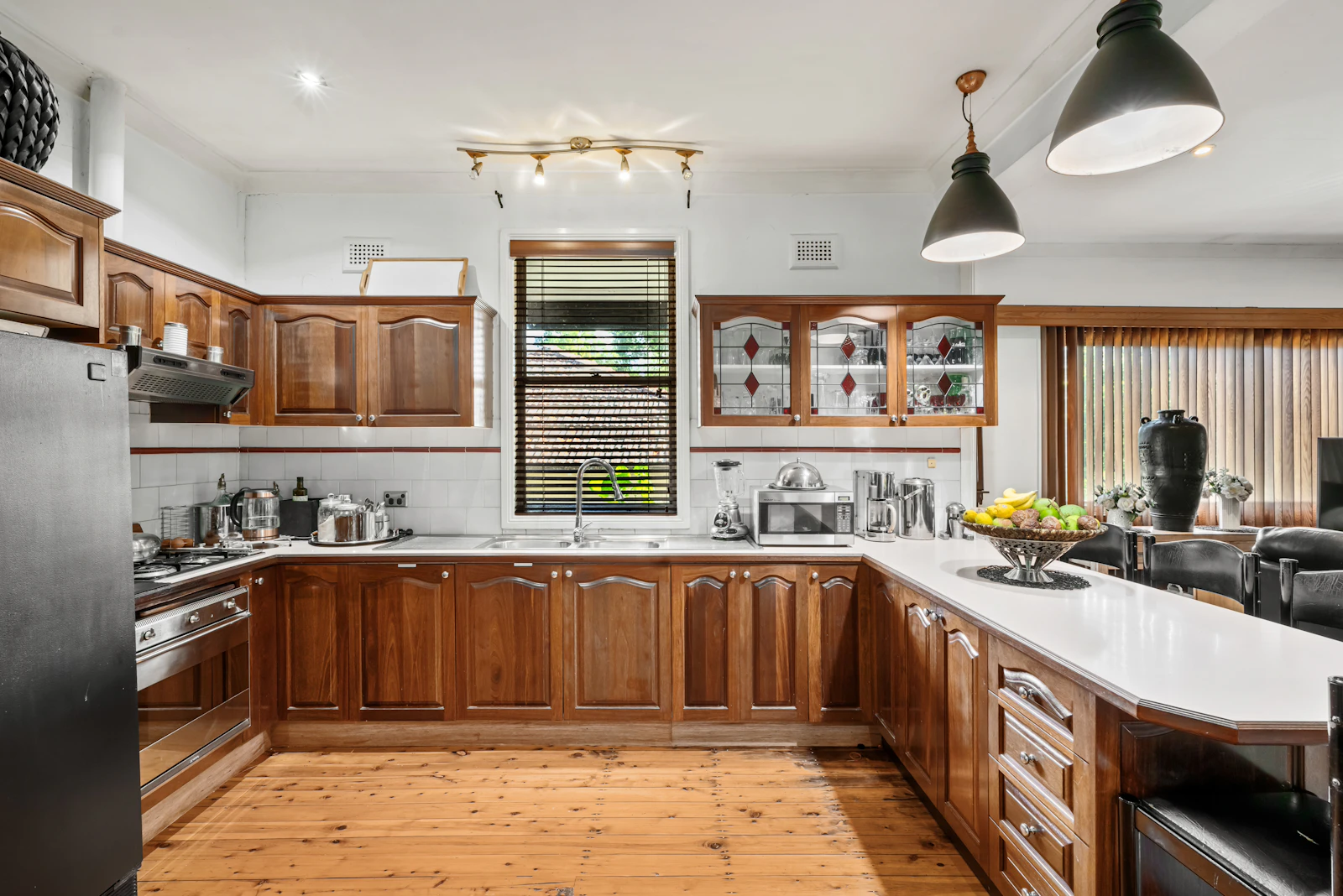
Good hardware should feel effortless.
Start with what the fitting needs to do. The finish comes after the function.
Furniture hardware includes the parts that let doors open, drawers move and storage stay organised. When replacing a fitting, match the mounting arrangement and dimensions rather than relying on appearance alone. For a new build, agree on the hardware before panels are cut or fixing holes are drilled.
Handles & pulls
Check screw spacing, grip clearance and door thickness. A handle should feel comfortable as well as suit the cabinet front.
Cabinet hinges
Match the door overlay, opening angle, mounting plate and fixing pattern. Soft-close operation is only one part of the specification.
Drawer runners
Measure the drawer depth and installation clearance. Confirm the runner's load rating and fitting instructions for your intended use.
Storage fittings
Plan shelf supports, hanging rails and internal organisers around the items you use, not just the empty cabinet dimensions.
Choose a wardrobe from the inside out.
A wardrobe can look generous and still leave everyday items awkward to reach. Before deciding between a compact single-door unit and a wider multi-door layout, list what needs to fit: long garments, folded clothes, shoes, bedding and small accessories.
Measure the room as well as the wardrobe. Allow for doors and drawers to open, nearby sockets, skirting boards and a comfortable route around the bed. Check the delivery route too, particularly narrow corridors, stair turns and apartment entrances.
Make hanging space intentional.
Separate long garments from shorter items. A second rail may be useful for shirts, while full-length pieces need a clear vertical space.
Put daily items within reach.
Use accessible shelves and drawers for frequently worn clothes. Higher shelves can hold less-used bedding or seasonal items.
Look beyond the door count.
Compare internal partitions, usable shelf depth, drawer travel and how the doors open. More doors do not automatically mean more useful storage.
For tall or freestanding furniture, discuss the appropriate stability and anchoring provisions with the installer and follow the furniture manufacturer's instructions.
Materials and finishes should suit the room.
Wood, wood-based boards and metal fittings each bring different practical considerations. Ask what the furniture is made from, how edges are finished and which surfaces need protection from moisture. A wood-look finish does not, by itself, tell you what is underneath.
For handles and visible fittings, compare samples against the actual cabinet colour. Matte black creates a clear contrast, brushed metal offers a quieter finish, and warm metallic tones can complement timber. Check the base material, finish specification and cleaning guidance rather than assuming colour indicates performance.
| Where it is used | What to check | What to ask |
|---|---|---|
| Kitchen cabinetry | Edge sealing, cleaning access and fitting clearance | Is this finish suitable for the intended exposure? |
| Bedroom storage | Usable capacity, door movement and stability | How are shelves supported and adjusted? |
| Frequently used drawers | Runner rating, extension and mounting space | What is the permitted load for this installation? |
| Humid environments | Moisture protection and hardware finish | What maintenance and environmental limits apply? |
Conditions vary between homes. A sheltered bedroom, a busy kitchen and a humid coastal setting can call for different choices. Ask for product-specific guidance rather than assuming that one material is suitable everywhere in Kenya.
Let the space decide what matters.
In the kitchen, prioritise access. Think about how close a drawer sits to a corner, whether a handle clashes with an adjacent door and where frequently used utensils will live. Check that pull-outs can open fully without meeting an appliance or wall.
In the living room, keep storage flexible. Adjustable shelving is useful when books, electronics and display objects share a cabinet. Plan cable routes and ventilation around the actual equipment, following the equipment manufacturer's requirements.
In a smaller bedroom, protect circulation. Mark the proposed furniture footprint on the floor before ordering. A shallower unit or a different door arrangement may serve the room better than the largest wardrobe that physically fits.
“The right fitting is the one you stop noticing — because it simply works.”
A principle for everyday furnitureA better workspace starts with the little things.
Desk accessories belong in the furniture plan too. A cable grommet gives wires a defined route through the desktop, while accessible storage keeps the working surface clear. Plan around the devices you actually use: a monitor, laptop charger, desk lamp and any peripherals.
If replacing a grommet, measure the existing opening and the desktop thickness. A product described as 60 mm still needs its stated cut-out and fitting dimensions checked. For a new opening, confirm the location with the furniture maker before drilling.
Leave connectors accessible, avoid trapping cables behind moving drawers and keep power connections away from spills. Where electrical changes are needed, use a suitably qualified professional.
Before you choose, check the details.
A few measurements and the right questions make it easier to compare options. Bring this list to your carpenter or supplier when planning furniture, cabinet fittings or a storage refresh.
- Room dimensions and delivery access
- Door swing and drawer clearance
- Panel thickness and mounting depth
- Handle screw centres and grip space
- Hinge type and door arrangement
- Runner length and stated load rating
- Materials, edge finishing and care
- Installation and replacement parts
Keep a written record of the selected fitting, finish and dimensions. For a larger project, review a sample or one completed unit before repeating the same detail across every cabinet.